Use a dose that suits your double basket. If your basket is designed for a different dose, use that amount instead.
ESPRESSO BASICS · DIAL IN
Find Your Right
Grind Setting
The right setting is not a number printed on a dial. It is the setting that gives your chosen coffee a controlled flow and a balanced-tasting cup. Start from a measured baseline, change one small thing, and let each shot teach you what to do next.
Start with18 g in · 36 g out*
Time target25–30 seconds*
Change ruleOne small step
*A practical double-espresso baseline; adjust the dose to your basket and use one consistent timing method.
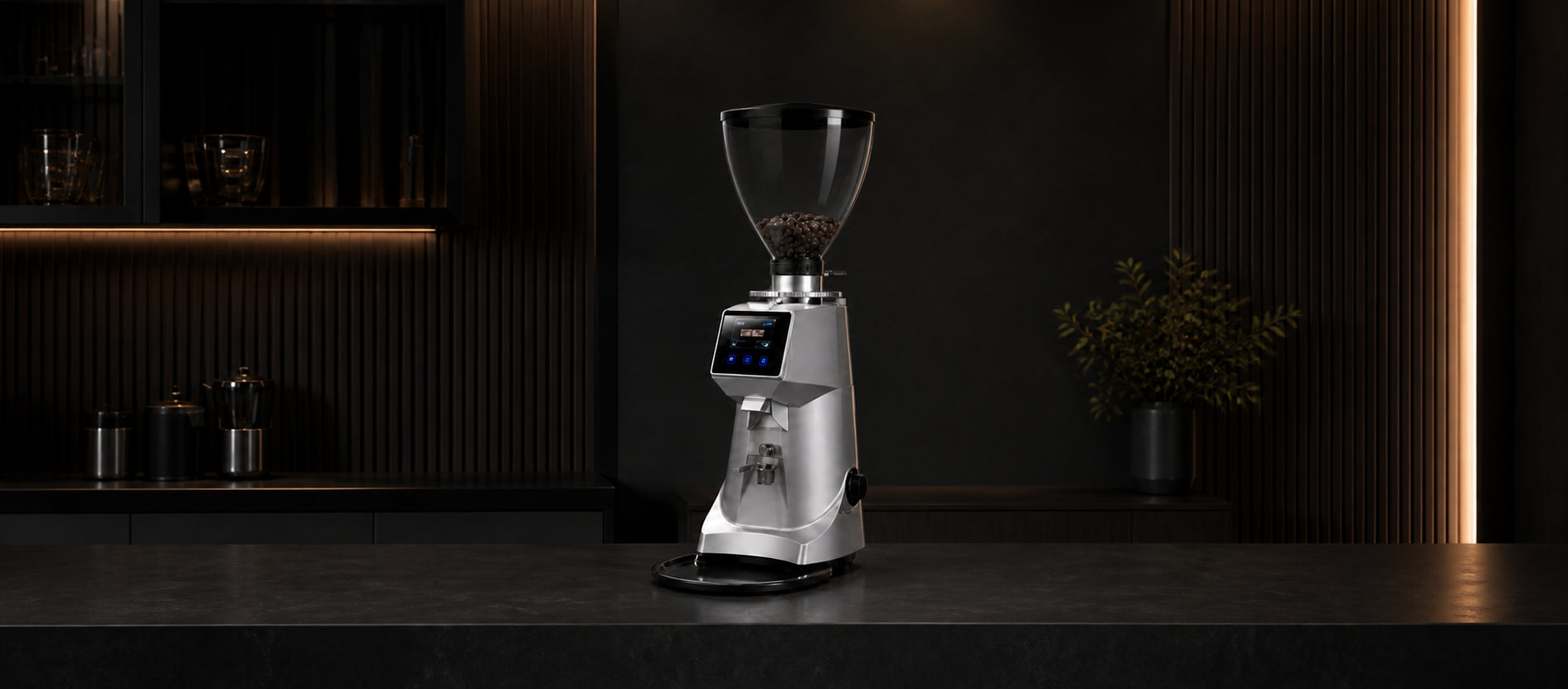
01 · BUILD A BASELINE
Make the first shot measurable
Do not chase the perfect dial number. First choose a recipe, then hold it steady while the grind setting does the work.
Start near a 1:2 brew ratio: 36 g of espresso from 18 g of dry coffee.
Pick one convention—such as pump start—and use it for every comparison.
Keep preparation steady
Use fresh coffee, a clean and dry basket, even distribution, and the same level tamp. A changing puck preparation can look like a changing grind.
Weigh both sides
Weigh the dry dose and the liquid yield. Time alone cannot tell you whether the recipe changed.
Taste after measuring
Flow gives direction; taste confirms it. Aim for a cup that is sweet, clear, and balanced for your coffee.
02 · ADJUST WITH INTENTION
One small change at a time
Keep dose, yield target, distribution, tamp, and temperature routine unchanged while you test the grinder.
-
01
Read the result before touching the dial
Record the dose, yield, and shot time. Taste the espresso after it cools slightly. Decide whether it ran too quickly, too slowly, or is already balanced.
-
02
Move only one small step
On a stepped grinder, move one click or detent. On a stepless grinder, make a tiny, marked movement. Do not also change dose, yield, or tamp while you learn what the new grind does.
-
03
Follow your machine's adjustment instructions
Some integrated grinders require the setting to be changed while the grinder is running; others specify a different procedure. Check your model's manual first, never force a stuck dial, and let the manufacturer instructions take priority.
03 · READ FLOW + FLAVOUR
Use the cup to choose direction
These are useful first moves, not a substitute for a consistent recipe. If the problem repeats after a controlled retest, make the small grind change shown below.
SHOT RAN TOO FAST
Fast, pale, or sharply sour
If the target yield arrives well before your time target, the stream looks pale, or the cup tastes thin and under-extracted, try one step finer.
Also check
Underdosing, uneven distribution, channeling, and a machine that is not fully warm can also speed a shot.
SHOT RAN TOO SLOW
Slow, dripping, or bitter
If the machine only drips, the yield takes well beyond the target time, or the cup tastes dry and over-extracted, try one step coarser.
Also check
An overfilled basket, excessive dose, or grounds on the basket rim can restrict flow too.
SHOT IS IN RANGE
Steady flow and a balanced cup
If flow is controlled and the cup tastes sweet and balanced, stop adjusting. Repeat the recipe once to confirm it before changing anything else.
Next move
Save the setting with the coffee name and roast date; beans naturally change as they age.
04 · PURGE · SETTLE · RETEST
Give the new setting a fair trial
Grinders retain coffee in the burr chamber and chute, so the first grounds out can reflect the old setting.
Adjust
Make one small, manual-approved change to the grinder.
Purge
Where your manual permits, grind and discard a small amount to clear retained grounds.
Settle
Some machines need more than one brew for an internal adjustment to show fully.
Retest
Grind a fresh full dose, brew the same recipe, then measure and taste again.
05 · KEEP A SHORT LOG
Repeat a good cup tomorrow
A one-line note is enough. It saves time when you change beans, clean the grinder, or return to a coffee you enjoyed.
| Coffee / date | Grind setting | Dose | Yield | Time | Result / next move |
|---|---|---|---|---|---|
| Example medium roast · day 7 | 12 | 18 g | 36 g | 28 s | Sweet and balanced — keep setting |
| Your next coffee | ________ | ________ | ________ | ________ | ________________________________ |
FURTHER READING
Use your model's instructions
These manufacturer resources explain why the adjustment method can differ by machine.
READY TO DIAL IN
Measure, taste, then make the next small move.
Need help with a specific machine or shot? Our equipment advisors can help you troubleshoot a repeatable recipe.